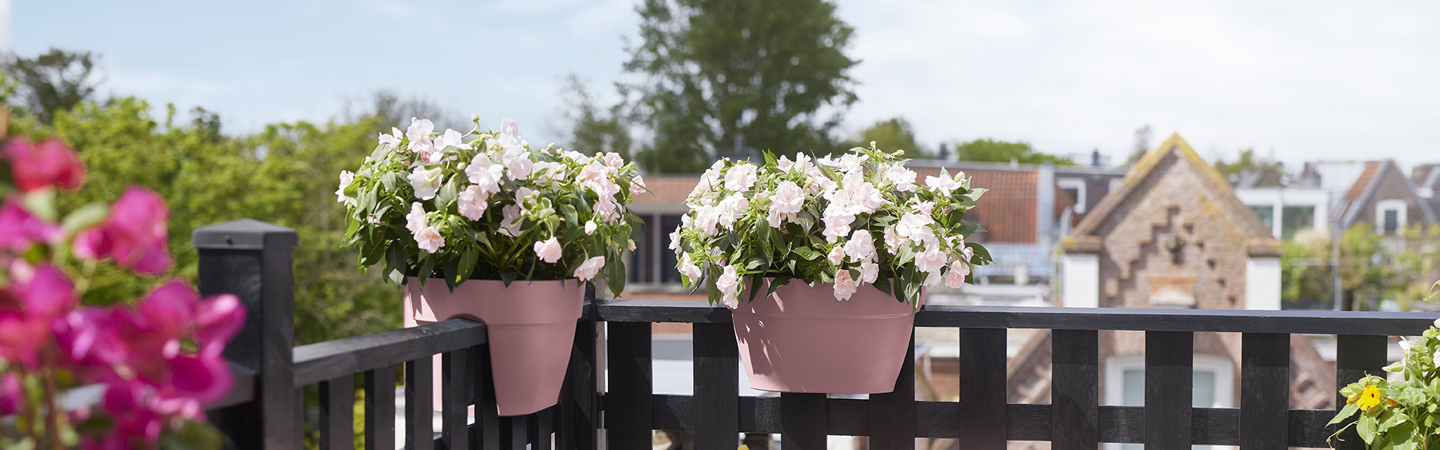
Oblong Planters
Are you looking for a planter in which you can put several plants beautifully together? Oblong planters are practical when you want to work along the length of a spot and give more greenery a place without setting out many loose pots. That makes them suitable for spots where you want to maintain overview, calm and cohesion. Indoors an elongated planter creates more calm and a neater whole. Outdoors this shape comes in very handy when you want to give flowers, herbs or green plants a clear spot together. That makes oblong planters pleasant to use and suitable for many types of interiors and outdoor spaces.
Diverse applications of oblong planters
With oblong planters you can go in many different directions. In the home they work very well on a windowsill, a dresser, a dining table or on a narrow cabinet where loose pots quickly look cluttered. You put several plants together as a whole and connect with the shape of the spot. Think of a row of herbs in the kitchen, a few green houseplants side by side in the living room or a mix of trailing and upright-growing greenery. Do you want to fill an empty spot without it feeling busy or full? Then an elongated shape is the ideal choice for you.
Outdoors the possibilities are just as broad. Oblong planters come into their own beautifully along a terrace, next to a garden path, near a seating area or against a fence where you want to see more greenery. You can combine flowers for colour, ornamental grasses for more height or herbs and compact plants for a fresh, lively look. A long planter helps to give an outdoor space more direction and connect loose elements. Are you looking for a practical way to make a spot greener while also creating more unity? Then a longer planter offers a lot of freedom without becoming complicated.
Which types of oblong planters suit your spot?
Longer planters come in many different versions. That is pleasant, because not every spot calls for the same solution. Sometimes you are looking for something that stands beautifully on a windowsill or table, while another space suits a planter you hang or place at a raised height. Which shape works best depends mainly on the spot and on what you want to plant.
One variant helps you to use space cleverly and another shape makes things feel a little more airy or playful. There are planters that take up little space, models that stand beautifully at height and versions that make a long, narrow spot greener without it looking busy. That gives you a lot of freedom in how you use greenery, indoors and outdoors.
There are also oblong planters with handy extras in the layout. Think of planters with multiple compartments, so you can divide and combine plants more easily. Some versions have a growing cover, which is practical when you want to pre-sow or let young seedlings come up undisturbed.
Popular variants at a glance
Here is an overview of different oblong planters with various functionalities.
- Balcony planters for narrow, long spots
- Flowerbridge models that you easily place over a ledge
- Hanging planters for more greenery at height
- Planters on legs for a more airy whole
- Planters with multiple compartments for a clear division of your plants
- Low longer planters that fit beautifully on a table or windowsill
By looking, trying and experiencing, you will quickly find the variant that suits you best.
How do you choose the right elongated planter?
Choosing an elongated planter may seem simple, but in practice a good match really makes a difference. At elho it is about a planter that works pleasantly in your daily life. The spot, the dimensions and the type of plants together determine which planter fits well. If you only look at the shape, you may sometimes discover later that a planter is too large, too narrow or less practical to use. With a few clear steps, choosing becomes a lot easier.
Step 1: Look carefully at the spot
Start with the space where the planter will stand. Measure the length, width and height and immediately look at the surroundings. Is the planter standing indoors on a windowsill or cabinet, or outdoors on a terrace or near the door? An elongated planter looks most beautiful when it suits the proportions of the spot and does not take up too much space.
Step 2: Think about what you want to plant in it
Not every plant calls for the same space. Low herbs need something different than ornamental grasses, flowering plants or a mix of different varieties. So look not only at the length of the planter, but also at the depth. The better the planter connects with the plants you have in mind, the more pleasant the whole looks and grows.
Step 3: Determine whether the planter will be indoors or outdoors
For indoors you often pay more attention to look, ease of use and how the planter suits your interior. Outdoors, weather resistance plays a greater role, as does drainage and sturdiness. An elongated planter for outdoors must be able to withstand rain, sun and temperature differences, while indoors you often choose a model that connects neatly with the rest of the space.
Step 4: Choose a model that suits your use
Sometimes you mainly want a calm base with greenery, while another situation calls for something more practical. Think of a planter on legs, a model with multiple compartments or a version that fits well in a narrow spot. So look not only at what is beautiful, but especially at what you find pleasant in use.
Step 5: Pay attention to the finish and details
The small differences often make all the difference. Look at the height, the rim, the material and whether a planter is easy to move or clean. If you want to pre-sow or divide plants neatly, a model with a handy layout or extra accessory may work just a little better. Think here of a growing tray or garden tray.
With these steps it becomes easier to choose an elongated planter that truly suits your space and way of living. Sometimes you know immediately, sometimes it helps to compare and feel what looks pleasant.
Different shapes and models of planters
Oblong planters are pleasant when you want to make use of the length of a spot, but sometimes a different shape simply fits better. A square planter often works well when you want to create a clear, compact base with a bit more volume in a fixed spot. A round planter looks softer and more relaxed, which works beautifully when you want to add more playfulness to a space. If you are looking for something in between, an oval planter can be a beautiful choice. That shape looks friendly, brings less harsh lines and often connects well in a calm interior or a green outdoor spot.
Which shape fits best is often also a matter of seeing and trying. A good plant plan is half the work, and after that it is about experimenting. So there is not just one right choice. It is mainly about which planter connects most beautifully with your spot and the way in which you want greenery to appear. So do not sit with questions or doubts, get in touch with us! Together we bring people and plants into balance.
Frequently asked questions about oblong planters
Does an elongated planter always need a drainage hole?
For outdoors a drainage hole is usually important. Excess rainwater must be able to run away, so that roots do not remain too wet. For indoors it depends on how you use the planter. If you choose an inner pot or insert pot, you can dose water more carefully and avoid wet potting soil at the bottom more easily.
What size elongated planter fits well on a windowsill?
A longer planter for the windowsill works most pleasantly when it stays a little narrower than the windowsill itself. It is often recommended to leave some space at the edges, so that the whole looks calmer and the planter stands more stably. Besides the length, therefore pay close attention to the width and height as well.
Can you leave an elongated planter outdoors in winter?
That is often perfectly fine, provided the planter is suitable for outdoors and excess water can drain away properly. Our elongated outdoor planters are frost-resistant down to very low temperatures, but we do advise preventing ice formation at the bottom by placing the planter slightly raised. That makes a particular difference in the wet winter months.
Do oblong planters need more water than other shapes?
Not necessarily. That depends mainly on the size, the spot and the types of plants in them. With larger or deeper planters, moisture often stays retained for longer, although good drainage remains important. Regularly feeling the potting soil in practice still works better than watering according to a fixed schedule.
Can an elongated planter also serve as a green partition?
Yes, that works very well. Precisely because of its length, an elongated planter is suitable for bringing more line to a space or demarcating a corner more clearly. With taller planting or ornamental grasses you can more easily create a green accent that also provides some shelter, without needing a fixed partition straight away.