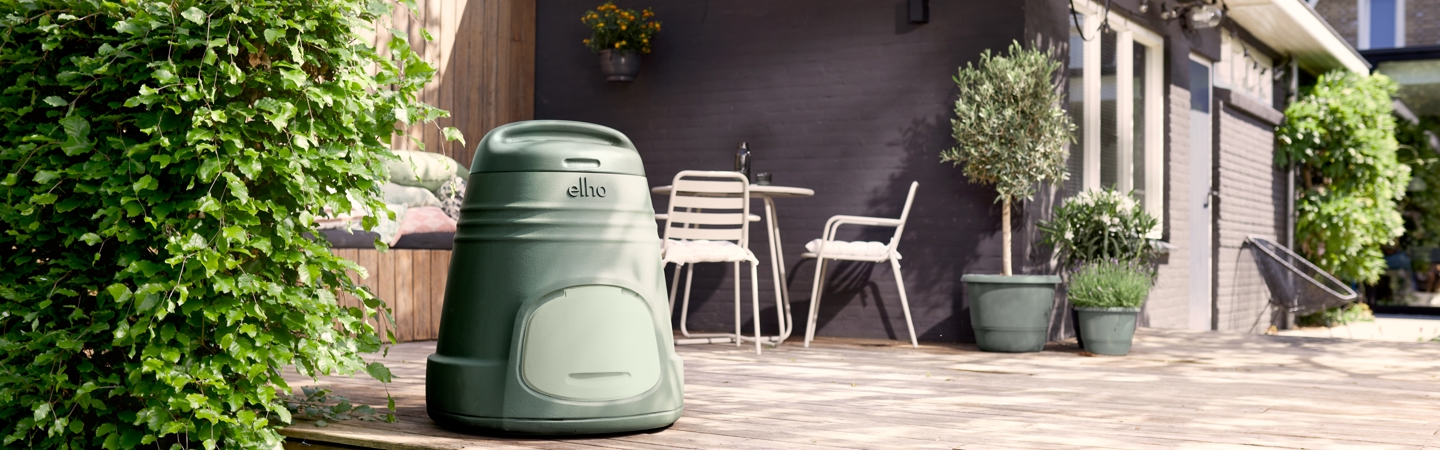
Compost Bin
A compost bin is the ideal solution for anyone who wants to turn garden waste and vegetable scraps into rich, nutritious compost in a sustainable way. By composting, you give your waste a second life and actively contribute to a greener environment. Thanks to its clever design, an elho compost bin allows you to easily collect garden waste and turn it into fertile compost for your plants and vegetable garden. Order your elho compost bin today and discover the joy of sustainable gardening.
Which types of compost bins are available?
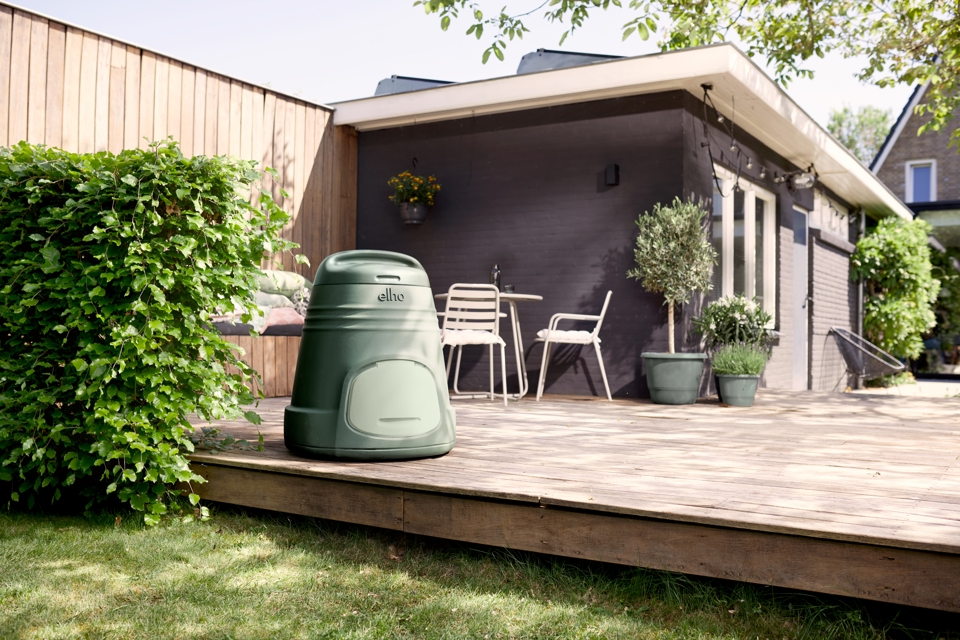
Looking for a compost bin that’s easy to use and good for the planet? The elho green basics composter is exactly what you need. Made from 100% recycled plastic and fully recyclable, it’s a sustainable choice from start to finish. Its smart one‑hand opening ensures ease during everyday composting. Want to speed up the process? The green basics composter base plate promotes biodiversity, improves airflow and keeps unwanted animals out.
What should you consider when buying a compost bin?
Want to buy a compost bin? A little preparation helps. Choose a semi‑shaded, level spot on bare soil. A 200‑litre compost bin is ideal for most gardens: spacious enough for regular kitchen and garden waste, but compact enough to fit anywhere. Easy to maintain, practical in use, and perfect for harvesting high‑quality compost throughout the year.
Want to make your garden even more sustainable? Combine your compost bin with an elho water butt. Not only do you gather valuable nutrients from waste, but you also collect rainwater — perfect for naturally watering your garden.
A nutrient‑rich garden: from composting to growing your own food
Composting is a wonderful way to add value to your waste — you nourish nature right in your own garden or balcony. This nutrient‑rich compost forms the ideal base for growing your own vegetables, herbs and strawberries. Use the compost from your compost bin to provide natural nutrients for healthier, stronger plants.
With tools like the noa grow table or a strawberry planter, growing becomes not only easy but fun — even in small spaces. Discover more on our grow & harvest page.
How to make nutrient‑rich compost at home
Successful composting starts with the right structure. Want great compost? Build it in layers:
-
Start with a base layer to create airflow.
-
Add brown materials like twigs and straw — they help with drainage and aeration.
-
Add green materials such as fruit and vegetable peels.
-
Alternate brown and green layers to balance carbon and nitrogen.
This balanced layering turns kitchen and garden waste into healthy, fertile compost within your compost bin. More composting tips here.
FAQ – Compost bins
Why choose a compost bin?
Composting isn’t just great for your garden — it’s good for the planet too. By composting at home, you give your waste a second life and actively contribute to a more sustainable way of living. A compost bin brings a whole range of benefits with it:
-
Compost bins reduce waste: kitchen and garden waste get a second life as rich compost.
-
Free food for your garden: compost is a natural, nutrient‑packed soil improver — good for your plants and the soil life beneath them.
-
Less need for fertiliser: with homemade compost, you rely far less on chemical fertilisers.
-
A sustainable choice: by composting yourself, you close the loop and support a healthier environment.
In short, a compost bin is an easy step towards a greener garden — and a more sustainable world.
How do I recognise mature compost?
Curious to know if your compost is ready to use? Mature compost is easy to recognise by a few clear signs. Look out for the following to check whether your compost has broken down properly:
-
Dark, crumbly soil
-
A pleasant, earthy smell
-
No visible food scraps or garden waste
Spot these signs? Then your compost is ready to give your garden a wonderful growth boost!
How do I choose the right size compost bin?
Depending on the space you have available, you can decide whether a large compost bin or a smaller solution is the best fit. Think about how much garden waste you usually have and how much compost you’d like to produce. This way, you’ll always choose a size that perfectly matches your needs.
How long does the composting process take?
How long the composting process takes depends on a few key factors:
-
Temperature: composting goes faster in the warmer months than in winter.
-
Waste mix: a good balance of brown and green materials speeds things up.
-
Oxygen and moisture: turning your compost regularly and ensuring enough air and moisture helps the breakdown process.
-
Using a compost bin: in a closed bin — like the elho green basics composter — the temperature stays more consistent, so the process often runs faster.
By keeping these factors in mind, you can speed up the composting process and enjoy rich, homemade compost even sooner.
What can and can’t go into a compost bin?
With the elho compost bin, you’re working with a “cold” composting method — a relaxed, low‑maintenance way of composting where you simply build up layers. Use the right building blocks for good compost. Think of “green” materials such as fruit and vegetable scraps, tea leaves and fresh grass cuttings. These nitrogen‑rich ingredients feed the microorganisms that do all the hard work. “Brown” materials like dry leaves, straw, cardboard and small twigs add carbon and help prevent unpleasant smells.
Be sure not to add cooked food, meat, dairy or bones to your compost bin. Bread and processed foods aren’t suitable either.