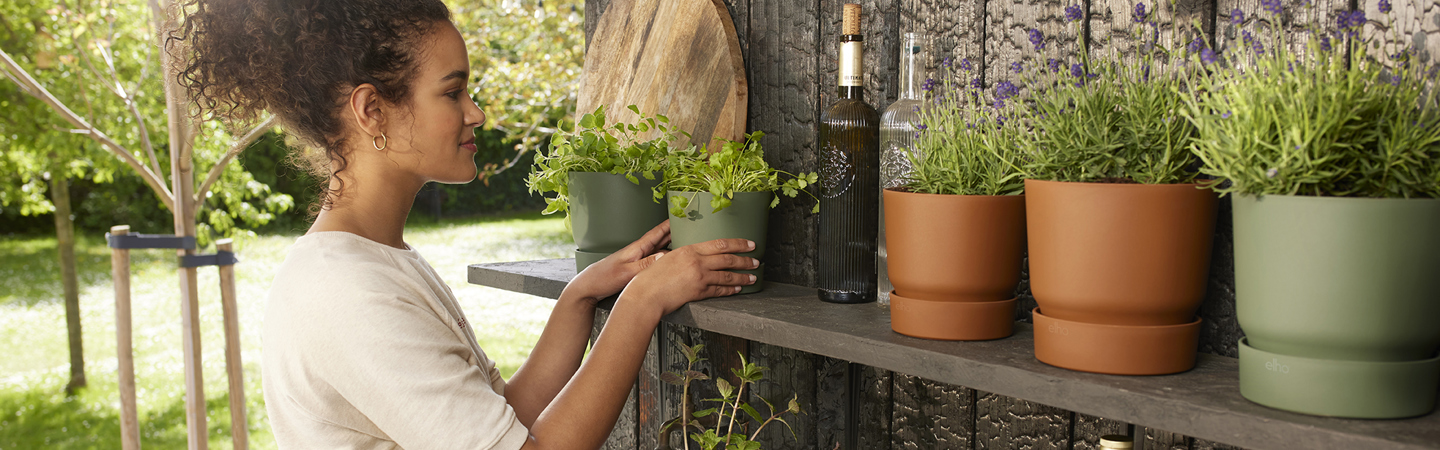
Plant pots with water reservoir
Caring for your plants and flowers becomes easy with plant pots that feature a water reservoir. You need to water less often, while your plants still receive exactly what they need. The reservoir collects water and releases it gradually, preventing the soil from drying out too quickly. This is perfect during busy weeks or when you’re away from home for a few days. The pots are available in various sizes and shapes, making it easy to match them with your interior or outdoor space.
What to expect from a plant pot with water reservoir
Plant pots with a water reservoir from elho help you water your plants in a calm and consistent way, without constantly checking whether the soil is still moist enough. Water is stored in the collection area at the bottom and gradually made available to the roots. This provides stability and supports even, healthy growth. Many models feature a convenient filling opening and a clear water indicator, so you can see at a glance when refilling is needed. The pots are made from lightweight yet strong recycled plastic, making them easy to move around your home, balcony or garden.
You can choose from different shapes and styles to suit your space. For outdoor use, simply open the drainage plug so rainwater can drain away, while keeping it closed indoors for neat water management. This makes one pot suitable for every situation. Thanks to the thoughtful design, plants stay better balanced and the soil dries out less quickly on warm days. As a result, these plant pots are perfect for a wide range of plants that prefer stable moisture levels. The end result is a calm, well-cared-for look without daily maintenance.
A step-by-step guide to using a plant pot with water reservoir
Give your flowers and plants exactly the right amount of moisture in a relaxed way. A water reservoir works best when roots have enough space to grow deeper and when the plant naturally prefers slightly moist soil. Always check whether the pot has a clear filling opening and whether the drainage plug can be opened or closed, depending on indoor or outdoor use. It also helps to consider the size of the reservoir. A larger reservoir provides longer-lasting support, while a smaller one is better suited to compact plants or areas where you water more frequently.
Suitable in these situations
-
Plants that prefer lightly moist soil
-
Periods when you have less time to water
-
Use on a balcony or terrace where wind dries out soil quickly
-
Indoor spaces where you want more stable water distribution
Less suitable in these situations
-
Plants that prefer drier soil or are sensitive to wet roots
-
Newly planted plants whose roots are not yet deep enough
-
Situations with heavy rainfall where a small drainage system fills quickly
-
Winter periods when water in the reservoir can freeze without proper drainage
By first identifying your plant’s needs and the location of the pot, you can quickly see whether a model with a water reservoir is the right choice.
Seasonal examples for indoor and outdoor use
Plant pots and planters with a water reservoir can be used all year round, both indoors and outdoors. They help plants grow evenly and bring peace of mind to plant care, no matter the season.
In spring, pots with a water reservoir are perfect for flowering plants such as petunias, pansies or lobelia on balconies and terraces. These plants need regular moisture, and the reservoir provides extra support on sunny days. Indoors, houseplants like calathea or spathiphyllum thrive with consistent moisture levels in the pot.
In summer, Mediterranean plants such as lavender, lemon verbena or compact ornamental grasses do well in outdoor pots. Indoors, plants that tolerate warmer temperatures, such as ficus or philodendron, benefit from the reservoir, which helps prevent drying out.
In autumn, focus on heather, chrysanthemums or small conifers outdoors for colour and structure, while indoor plants like ferns or zamioculcas enjoy a calm, stable moisture level.
In winter, evergreen plants such as boxwood or skimmia keep your balcony or garden from looking bare. Indoors, plants like monstera or indoor palms help create a stable indoor climate, with the water reservoir supporting balanced humidity. This way, your plant collection stays attractive and well cared for in every season.
Checklist for choosing and using a plant pot with water reservoir
A plant pot with a water supply helps keep your plants healthy for longer, especially if you take a moment to consider a few key points beforehand. This checklist helps you choose and use the right pot, ensuring your plant has a comfortable and reliable place from the start.
Choosing the right pot
-
Check that the pot is deep enough for roots to reach the water supply
-
Make sure the pot has a clear filling opening
-
Check the drainage plug: open for outdoor use, closed for indoor use
-
Choose a size that suits your plant’s growth rate
-
Match colour and shape to your interior or outdoor space
Use and maintenance
-
Water from the top during the first few weeks so roots grow downward
-
Occasionally check that the filling opening is free of soil or leaves
-
Consider rainfall on a balcony or terrace when the drainage plug is closed
-
Avoid overfilling the pot in winter when used outdoors
-
Refill the reservoir regularly when you notice the soil drying out faster
With this checklist, you’ll make the right choice more quickly and get the most out of a plant pot with an integrated water reservoir.
Frequently asked questions about plant pots with water reservoir
How does a plant pot with a water reservoir work exactly?
At the bottom of the pot, there is a space where water is stored. Once the roots grow deep enough, they gradually absorb this water. This keeps the soil evenly moist and prevents the plant from drying out too quickly. Water reservoirs can usually be filled two ways; some you can refill via a filling opening, usually located at the top or side of the pot. Other water reservoirs are located in the base of the pot and fill up naturally when you water your plant and the liquid flows through the soil.
How often should I water a pot with a water reservoir?
This depends on the size of the pot, the season and your plant’s needs. In warm periods, water evaporates more quickly and the reservoir empties faster. The reservoir helps maintain the right moisture level for longer, but occasional refilling is still necessary. We recommend using your senses to tell when your plants need watering again: use your finger to feel the top centimeters of soil. Is it wet? Then you can wait a bit longer. Is the soil dry? Your plant is ready for a drink! Your plant drying out can take upwards of days.
Can I use a plant pot with a reservoir outdoors?
Yes, as long as the pot is suitable for outdoor use. Many models have a drainage plug or an overflow pipe that can be opened to allow rainwater to drain away. For indoor use, you close the plug or use a saucer to prevent water from leaking onto the floor. Outdoors, a pot with a reservoir works especially well for plants that dry out quickly due to sun or wind.
Which plants benefit most from a water reservoir?
Plants that prefer slightly moist soil benefit the most. Think of houseplants such as calathea, spathiphyllum and ficus, or outdoor plants like petunias, lobelia or herbs that need regular watering. Plants that prefer drier conditions are less suitable for this system.
How should I use a pot with a reservoir during the first few weeks?
Water the plant from the top initially so the roots can establish themselves firmly. Once the roots have grown deep enough, they will start using the reservoir. This ensures the system works optimally and helps the plant root properly in the pot. After that, we recommend alternating filling the reservoir and watering from above to ensure proper root health.