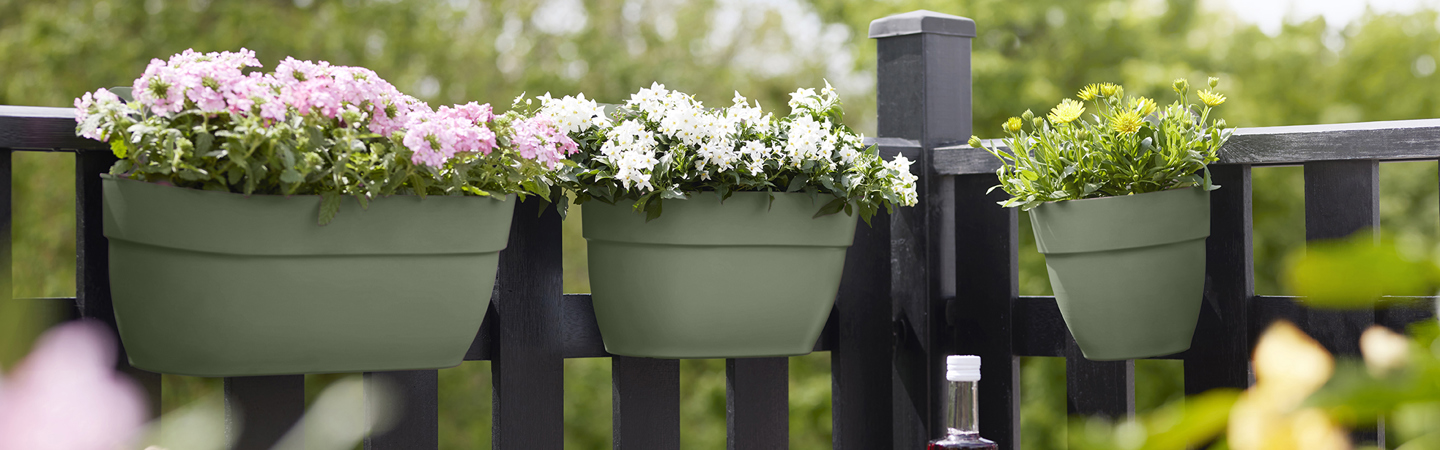
Hanging Planters
With hanging planters from elho, you can easily add more greenery without needing floor space. By using height on a balcony, fence or wall, the area remains open and well cared for. A hanging planter offers room for multiple plants and helps keep outdoor spaces organised. Varying heights and placement creates depth, while allowing you to move freely. Perfect for city balconies, garden fences or outdoor walls where greenery deserves to stand out just a little more.
Suggested filters
Hanging plant pots
Which hanging planter suits you best?
The hanging planter that suits you best depends on where you want to hang it. In the garden, planters can be slightly larger, for example on a fence, wall or pergola. They offer space for several plants and together form a green backdrop, without the need to create extra borders. On a balcony, a more compact hanging planter feels more comfortable. Mounted on a railing or wall, the space stays open and easy to move around in, while you still enjoy plenty of greenery.
What should you consider for each space?
The location you choose determines how visible and practical a planter will be. Outdoors weather conditions such as wind, rain and sunlight always play a role. Take a moment to consider a few important points in advance, so your plants feel comfortable and the planter remains securely in place:
-
Check whether the wall, fence or railing has sufficient load-bearing capacity
-
Look at how much light the planter receives during the day
-
Take rain and wind into account for outdoor use
-
Determine the right height so plants remain clearly visible
-
Make sure watering stays easy
By keeping these points in mind, you avoid impractical placement and ensure your hanging planter is positioned just right.
Which plants do you choose for a hanging planter?
The size of the planter determines which plants will thrive in it. A planter with enough space allows roots to grow, retain water properly and absorb nutrients. This means plants dry out less quickly, remain stable and grow evenly. Paying attention to this helps keep plants healthy and ensures the overall look stays well balanced.
Small hanging planters
-
Herbs such as mint or thyme
-
Compact flowering plants such as pansies
-
Small trailing plants with fine foliage
Medium-sized planters for hanging plants
-
Ivy for a lush green look
-
Lobelia or petunia for colour
-
Ferns with full but light growth
Large planters for vertical planting
-
Ornamental grasses for structure
-
Combinations of multiple plants
-
Larger trailing plants that need extra volume
Match your plant choice to the size of the planter to keep your hanging planter balanced and attractive throughout the season.
Mounting your own hanging planter: a practical step-by-step guide
A hanging planter is best installed by working carefully and using the right mounting materials. The steps below provide a practical example for hanging a planter using brackets and hooks. Depending on the type of planter, mounting may vary, but this guide gives you a solid starting point.
-
Measure the available space
First, decide where the planter will hang. Measure the width and leave some space on both sides so your plants have room to breathe. Also measure the height from the ground to ensure the planter is clearly visible and not in the way. Plants enjoy space just like you do. -
Mark the fixing points
Hold the bracket, hook or holder against the wall, fence or beam. Use a spirit level to keep everything straight and mark the drill points with a pencil. This ensures your planter hangs evenly. -
Choose the right mounting materials
For wood, use sturdy screws; for stone or concrete, use wall plugs with screws. Always check the maximum load capacity of the hooks or brackets, including potting soil and plants. -
Drill and attach the hooks
Drill holes at the marked points and insert wall plugs where needed. Securely fasten the hooks or brackets so everything stays firmly in place when gently pulled. -
Hang the planter and check stability
Hang the empty planter first and check that it is level. Then fill it with potting soil and plants. Do a final check to ensure everything remains stable and watering is easy.
With this approach, you can safely mount a hanging planter and immediately start filling and caring for your plants. Time to give your greenery a beautiful place.
.
Planters as a mood enhancer for outdoor living
Hanging planters instantly add character to outdoor spaces without sacrificing ground space. Mounted on a fence, they form a green wall that adds depth to a garden or terrace. On a balcony, they bring colour and life while keeping the floor free for movement or seating. Hanging plants at different heights creates a playful, natural look. Especially on urban balconies, this shows that even small spaces can make a big green statement.
Hanging planters also add atmosphere to terraces or areas under a canopy. They frame a seating area and create a sense of shelter without closing off the space. Flowering plants bring seasonal colour, while green plants add calm and continuity. As light filters through the leaves, the look of your outdoor space changes throughout the day.
Frequently asked questions about hanging planters
Which plants are suitable for a hanging planter?
Plants with trailing or spreading growth work best in hanging planters. Think of ivy, ferns, scindapsus or flowering plants such as petunia and lobelia. These plants distribute their weight evenly and create a full look without throwing the planter off balance.
How do I safely attach a hanging planter?
Secure mounting starts with the right materials. This is a practical example for hanging planters mounted with brackets or hooks. Always use fixtures suited to the surface, such as wood, stone or concrete. Measure fixing points carefully and check the maximum load capacity in advance, including soil and plants. A secure installation gives your plants the peace of mind they need to grow.
Can a hanging planter be used outdoors?
Many hanging planters are suitable for outdoor use, provided they are securely mounted. Pay attention to drainage so water does not remain in the planter, and regularly check that the fixings stay firm.
How do I prevent a hanging planter from becoming too heavy?
Choose lightweight potting soil and plants that do not grow too densely. Do not overfill the planter and check the weight after rainfall when using it outdoors. This helps prevent overloading hooks or fixing points.
How do I maintain plants in a hanging planter?
Regularly check the moisture level of the soil and water carefully. Hanging planters can dry out more quickly because air circulates around them. Occasional pruning helps keep growth balanced and maintains the planter’s shape.