Brown Planters
Brown is the colour of nature itself. A brown planter connects with what is already there: wood, stone, earth and greenery. The shade asks for no adjustment from its surroundings, but strengthens what is already in place. Brown planters come in a range of variations, from light sandy brown to deep ginger brown, and in all shapes and sizes. For outdoors in the garden or on the patio, but also well at home on a balcony or in a warm interior.
Suggested filters
Brown planters for outdoors: warm and versatile
Outdoors is where brown is at its best. The pot connects with terracotta tiles, wooden decking and natural stone without competing with its surroundings. On a patio a brown planter gives warmth and an earthy appearance that black or white do not give in the same way. Along a border, next to a garden path or by a seating area: the appearance never strikes the wrong note. It is already there, as part of nature.
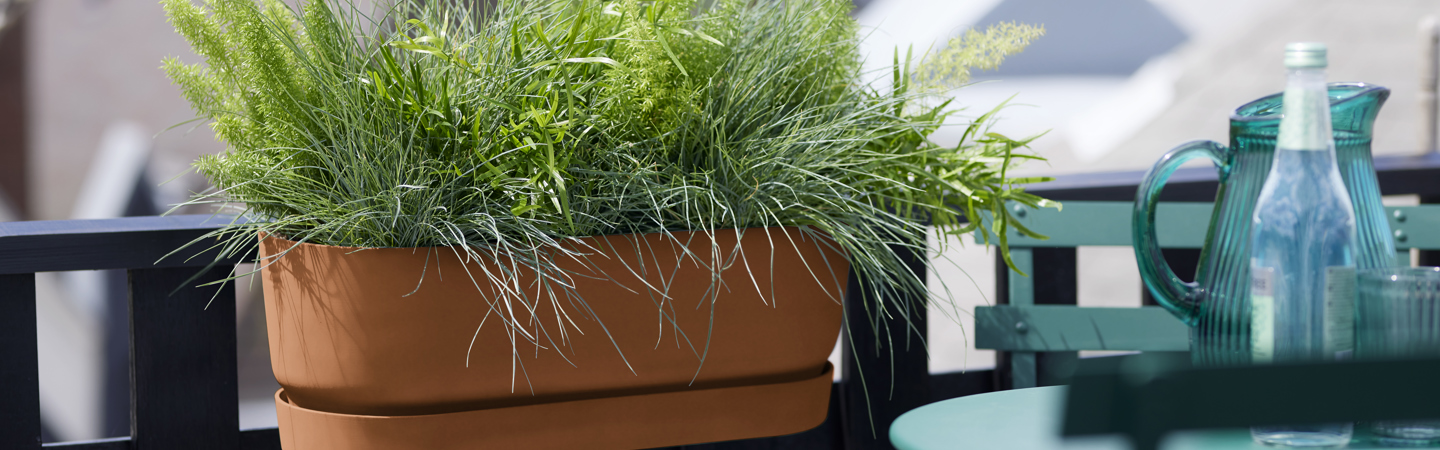
On a balcony, brown planters work well together with wooden furniture and natural accessories. Brown makes a balcony warmer and more inviting without you having to do much for it. Several planters in the same trend along the railing give a coherent appearance. The models from elho are made from recycled plastic, resistant to rain, sun and frost, and ask for virtually no maintenance.
What is a modular planter and when do you choose one?
A modular planter in brown is a planter you can combine with other modules, along a railing, on a patio or side by side on the ground. The models connect to one another, so you make optimal use of the space and create a coherent green line. Pleasant on a balcony where every centimetre counts, but also along a patio edge or driveway. You start with one or two planters and build out further as needed.
Planters in brown: warm and present indoors too
Indoors, brown works quite differently than outdoors, but no less well. The pot brings warmth into a space that otherwise feels too cool or too plain. In a light interior a brown planter adds depth without dominating. In a warmer interior with wood and earthy materials it reinforces the atmosphere that is already there.
A brown planter fits in almost every place in the house. In the living room next to a wooden sofa or coffee table. In the hallway as a warm welcome on arrival. In the bedroom for an earthy, organic mood. In a study as a calming element that draws attention to the plant rather than to the pot.
The choice of shapes makes it easy to find the right match. Round planters have a soft appearance and work well as a standalone accent. Square or rectangular models give more line, pleasant along a wall or in a more crisply arranged interior. Elongated planters are handy in a narrow space or along a windowsill with several plants side by side.
Indoors it combines well with virtually any material. Next to wood it strengthens the warmth. With rattan or wicker the combination feels organic and natural. With light walls and a light floor, the brown planter gives a space just enough contrast to stay interesting. Add a plant with pronounced green or dark leaves, and the earthy appearance brings that colour extra to life.
Combining with colour, height and size
The pot works as an anchor in an arrangement. You can put virtually anything next to it and it works. Still, there are combinations that always work:
Colour
With green and terracotta you get a fully earthy whole that feels natural straight away. Beige and sandy shades sit close to brown and give a soft, coherent mood. White next to brown gives more contrast and lets the warm combination come out better.
Material
Next to wood, both materials reinforce each other. Concrete and stone give a tougher, industrial combination. With rattan or linen the arrangement becomes warmer and softer in mood.
Size
Use a large planter as an anchor point and smaller models as an addition. Three planters of different sizes together always works better than three of the same.
The colour adapts to the arrangement and asks for little steering. Put them down and it works.
Prefer a different model or collection?
Anyone looking for a different version will find plenty of choice within the range. White planters give a space more air and light and work well as a counterpart to dark or warm colours in the surroundings. Black planters give more contrast and a crisper, more modern character. For anyone who wants to keep the warm feeling but is looking for a smaller size, the brown flowerpots offer a good alternative. Smaller round or square pots in the same guise work well next to larger planters when you want to build up a space with variation in shape and scale. The mood you have in mind ultimately determines the choice.
Frequently asked questions about brown planters
Does a brown planter fade in the sun?
The elho models are made from UV-resistant recycled plastic. The shade keeps its strength with prolonged outdoor use, even in direct sunlight. With lower-quality plastic the finish can fade a little after years, but that does not apply to the elho pots.
Are brown planters suitable for outdoors all year round?
Yes. The models are made from frost-resistant recycled plastic and withstand rain, sun and changing temperatures. In winter, make sure your pot has good drainage to prevent frost damage.
How do I combine a brown planter with my interior?
The shade suits virtually any natural or warm interior. Combine with wood, rattan and earthy materials for an organic mood. In a light interior the brown planter gives warmth and depth. For more contrast, put it in front of a light wall or next to a white or light pot.
How do I clean a brown planter?
Rinse the planter with lukewarm water and use a soft brush or sponge for stubborn dirt. A mild washing-up liquid helps with caked-on soil or traces of limescale. Avoid abrasive products, as they can damage the outside. Cleaning once or twice a year is more than enough for most planters.
What is the difference between a brown and a terracotta planter?
Terracotta is a material, brown is a colour. A terracotta pot is made from fired clay and naturally has a warm reddish-brown shade, but is heavy and less frost-resistant. A brown planter made from plastic gives a comparable warm appearance, is a good deal lighter and lasts much longer with year-round outdoor use.